1

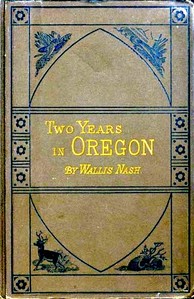
Two Years in Oregon — Context and Discussion
(0 User reviews)
499
Project Gutenberg
2011
Not confirmed
Oregon -- Description and travel
Readers of public-domain and historical texts
Project Gutenberg digital edition
en
Edition facts
Words
93,417
Reading time
407 min
Text sections
10
The catalog record for Two Years in Oregon — Context and Discussion provides practical reading context through 93,417 words, 6 hr 47 min estimated reading time, and 10 detected text sections.
The text analysis averages about 25.6 words per sentence, while the detected sections provide another way to judge how the source is divided.
Project Gutenberg metadata also associates the work with “Oregon -- Description and travel,” connecting these edition facts with the source record’s subject description.
Source:
Project Gutenberg record #35288
Wallis Nash's 1882 account of Oregon settlement blends personal narrative with climate tables, crop costs, and cautionary advice, structured around seasonal cycles and the tension between boosterism and practical hardship.
Editorial Edition Score
4.9/5
★★★★★
★★★★★
Calculated from edition completeness, EPUB availability, text structure and catalogue metadata. Not a user rating.
How this score is calculated
- Description quality20 pts
- Title & short description10 pts
- Source metadata20 pts
- Text length15 pts
- Chapters / structure15 pts
- EPUB file integrity20 pts
Total of 100 points, scaled to a 2.5-5.0 range. Editions with an empty description or a missing EPUB file are not scored.
Edition quality
Read the Text
Personal reasons for coming to Oregon--Plans of colonizing--Who came--Who have returned--Who remain--Bowie-knives and revolvers--A sheriff in danger--No tragedy--Our landing at Corvallis--Frail houses--Pleasant welcome--The barber's shop--Its customers--Given names--New acquaintances--Bright dresses--Religious denominations. 17
Where we live--Snow-peaks and distant prospects--Forest-fires--The Coast Mountains and Mary's Peak--Sunset in Oregon--Farmhouses: the log-cabin, the box-house, the frame-house--Dinner at the farm--Slay and eat--A rash chicken--Bread-making by amateurs--Thrift and unthrift--Butter and cheese--Products of the "range," farm, and garden--Wheat-growing. 26
The land-office; its object and functionaries--How to find your land--Section 33--The great conflagration--The survivors of the fire--The burnt timber and the brush--The clearing-party--Chopping by beginners--Cooking, amateur and professional--The wild-cat--Deer and hunting--Piling brush--Dear and cheap clearing--The skillful axeman--Clearing by Chinamen--Dragging out stumps--What profits the farmer may expect on a valley farm--On a foot-hills farm. 36
A spring ride in Oregon--The start--The equipment--Horses and saddlery--Packs--The roadside--Bird fellow-travelers--Snakes--The nearest farm--Bees--The great pasture--The poisonous larkspur-- Market-gardening--The Cardwell Hill--The hill-top--The water-shed --Mary River--Crain's--The Yaquina Valley--Brush, grass, and fern --The young Englishmen's new home--A rustic bridge--"Chuck-holes"-- The road supervisor--Trapp's--The mill-dam--Salmon-pass law--Minnows and crawfish--The Pacific at rest--Yaquina--Newport. 48
Hay-harvest--Timothy-grass--Permanent pasture--Hay-making by express--The mower and reaper--Hay-stacks as novelties-- Wheat-harvest--Thrashing--The "thrashing crowd"--"Headers" and "self-binders"--Twine-binders and home-grown flax--Green food for cows--Indian corn, vetches--Wild-oats in wheat--Tar-weed the new enemy--Cost of harvesting--By hired machines--By purchased machines--Cost of wheat-growing in the Willamette Valley. 62
The farmer's sports and pastimes--Deer-hunting tales--A roadside yarn--Still-hunting--Hunting with hounds--An early morning's sport--Elk--The pursuit--The kill--Camp on Beaver Creek-- Flounder-spearing by torchlight--Flounder-fishing by day--In the bay--Rock oysters--The evening view--The general store--Skins-- Sea-otters--Their habits--The sea-otter hunters--Common otter--The mink and his prey. 72
Birds in Oregon--Lark--Quail--Grouse--Ruffed grouse--Wild-geese-- Manoeuvres in the air--Wild-ducks--Mallard--Teal--Pintail-- Wheat-duck--Black-duck--Wood-duck--Snipe--Flight-shooting-- Stewart's Slough--Bitterns--Eagles--Hawks--Horned owls--Woodpeckers --Blue-jays--Canaries--The canary that had seen the world--Blue-birds --Bullfinches--Snow-bunting--Humming-birds at home. 91
Up to the Cascades--Farming by happy-go-lucky--The foot-hills--Sweet Home Valley--Its name, and how deserved and proved--The road by the Santiam--Eastward and upward--Timber--Lower Soda Springs--Different vegetation--Upper Soda Springs--Mr. Keith--Our reception--His home and surroundings--Emigrants on the road--The emigrant's dog--Off to the Spokane--Whence they came--Where they were bound--Still eastward-- Fish Lake--Clear Lake--Fly-fishing in still water--The down slope east--Lava-beds--Bunch-grass--The valleys in Eastern Oregon--Their products--Wheat-growing there--Cattle-ranchers--Their home--Their life--In the saddle and away--Branding-time--Hay for the winter--The Malheur reservation--The Indians' outbreak--The building of the road--When, how, and by whom built--The opening of the pass--The history of the road--Squatters--The special agent from Washington--A sham survey. 100
Indian fair at Brownsville--Ponies--The lasso--Breaking-in--The purchase--"Bucking" extraordinary--Sheep-farming in Eastern Oregon-- Merinos--The sheep-herder--Muttons for company--A good offer refused--Exports of wool from Oregon-Price and value of Oregon wool--Grading wool--Price of sheep--Their food--Coyotes--The wolf-hunt--Shearing--Increase of flocks--"Corraling" the sheep-- Sheep as brush-clearers. 118
The trail to the Siletz Reserve--Rock Creek--Isolation--Getting a road--The surveying-party--Entrance at last--Road-making--Hut-building in the wilds--What will he do with it?--Choice of homestead--Fencing wild land--Its method and cost--Splitting cedar boards and shingles-- House-building--The China boy and the mules--Picnicking in earnest--Log-burning--Berrying-parties--Salting cattle--An active cow--A year's work--Mesquit-grass on the hills. 127
The Indians at home--The reservation--The Upper Farm--Log-cabins-- Women must work while men will play--The agency--The boarding-house --Sunday on the reservation--Indian Sun day-school--Galeese Creek Jem--The store-Indian farmers--As to the settlement of the Indians --Suggestions--A crime--Its origin--Its history--The criminals-- What became of them--Indian teamsters--Numbers on the reservation --The powers and duties of the agent--Special application. 136
The Legislative Assembly--The Governor--His duties--Payment of the members--Aspect of the city; the Legislature in session--The lobbyist--How bills pass--How bills do not pass--Questions of the day--Common carriers--Woman's suffrage--Some of the acts of 1878--Judicial system of the State--Taxes--Assessments--County officers--The justice of the peace--Quick work. 145
Land laws--Homesteads and preemption--How to choose and obtain Government land--University land--School land--Swamp land--Railroad and wagon-road grants--Lieu lands--Acreages owned by the various companies. 157
The "Web-foot State"--Average rainfall in various parts--The rainy days in 1879 and 1880--Temperature--Seasons--Accounts and figures from three points--Afternoon sea-breezes--A "cold snap"--Winter-- Floods--Damage to the river-side country--Rare thunder--Rarer wind-storms--The storm of January, 1880. 164
The State Fair of 1880--Salem--The ladies' pavilion--Knock-em-downs _a l'Americaine_--Self-binders--Thrashing-machines--Rates of speed--Cost--Workmanship--Prize sheep--Fleeces--Pure _versus_ graded sheep--California short-horns--Horses--American breed or Percheron--Comparative measurements--The races--Runners--Trotters-- Cricket in public--Unruly spectators. 174
History of Oregon--First discoverers--Changes of government-- Recognition as a Territory--Entrance as a State--Individual histories--"Jottings"--"Sitting around"--A pioneer in Benton County--How to serve Indian thieves--The white squaw and the chief--Immigration in company--Rafting on the Columbia--The first winter--Early settlement--Indian friends--Indian houses and customs--The Presbyterian colony--The start--Across the plains-- Arrival in Oregon--The "whaler" settler--A rough journey--"Ho for the Umpqua!"--A backwoodsman--Compliments--School-teacher provided for--Uncle Lazarus--Rogue River Canyon--Valley of Death--Pleasant homes--Changed circumstances. 183
State and county elections--The Chinese question--Chinese house-servants--Washermen--Laborers--A large camp--Supper--Chinese trading--The scissors--Cost of Chinese labor--Its results--Chinese treaties--Household servants--Chee and his mistress--"Heap debble-y in there"--The photo album--Temptation--A sin and its reward--Good advice on whipping--Chung and the crockery--Chinese New Year--Gifts-- "Hoodlums"--Town police--Opium. 201
Life in the town--Sociables--Religious sects--Sabbath-schools-- Christmas festivities--Education, how far compulsory--Colleges-- Student-life and education--Common schools--Teachers' institutes-- Newspapers--Patent outsides-"The Oregonian"--Other journals--Charities --Paupers--Secret societies. 209
Wallis Nash opens Two Years in Oregon with a Milton epigraph on landscape and a Tennyson couplet on mastering fate, signaling a work that oscillates between lyrical description and hard-headed calculation. The book’s structure follows a seasonal logic: Nash moves from arrival in Yaquina Bay through the agricultural year, interspersing chapters on climate, soil, and markets with personal anecdotes. A recurring image is the sea-breeze that rises each afternoon—a relief to the harvester but, as Nash warns, a source of rheumatism if precautions are ignored. This tension between the region’s promise and its physical demands shapes the narrative.
Tables as Narrative Devices
Nash embeds extensive meteorological tables—monthly rainfall, temperature ranges, and seasonal averages for Portland, Eola, and Corvallis—directly into the prose. These are not appendices but arguments: the data contrasts Oregon’s moderate 26° seasonal range with Iowa’s 55.3° swing, making a case for the Willamette Valley’s equability. Yet the tables also reveal the author’s method: he treats climate as a settler’s tool, not a picturesque backdrop. The figures for July’s 0.24 inches of rain or the “cold snap” of 1879–80, when the wind “veered round northward,” are offered as evidence for practical decisions—when to plant, when to shelter livestock.
The Body as a Site of Risk
Nash repeatedly frames the settler’s body as vulnerable to Oregon’s conditions. The sea-breeze that cools the hay-field also threatens “rheumatism or its near relative, neuralgia.” He prescribes a specific regimen: “put on your warm coat and button it close, and let the cooling process be a very gradual one.” This advice recurs across chapters, linking climate to corporeal consequence. The winter scene of cattle with “rough coats and drooping heads” mirrors the human need for adaptation. Nash’s caution—blame yourself, not the climate—turns the landscape into a test of character, where bodily discipline determines success.
Movement Between Coast and Valley
The narrative shuttles between two Oregon geographies: the coast at Yaquina Bay, where ships anchor, and the interior valleys where Nash farms. This movement is both literal and structural. The opening chapter describes the anchorage; later sections track inland travel, crop cycles, and market access. Nash notes the cost of hauling wheat to port—a figure that subtracts from the farmer’s profit—and the difference between seed-wheat valued at seventy cents and marketed wheat at eighty-five to ninety cents. These details anchor the book’s dual perspective: the coast as gateway, the valley as site of labor, and the journey between them as economic calculus.
Corrections and Second Thoughts
The preface to the second edition reveals Nash’s willingness to revise. He apologizes to the Roman Catholic Archbishop and the Sisters of Charity for misattributing St. Vincent’s Hospital to Bishop Morris, and notes the Good Samaritan Hospital he had omitted. This self-correction extends to economic detail: he refines the price of seed-wheat, explaining that the reserved grain avoids “charges and waste incident to hauling, storage, insurance, and sacking.” Such emendations suggest a writer attentive to accuracy, even at the cost of narrative polish. The book’s structure thus includes its own afterthoughts, making the second edition a layered document of settlement knowledge.
Readers will find that Nash’s Oregon is a place of precise numbers and bodily risk, where a table of rainfall carries as much weight as a description of scenery. The book rewards attention to its margins—the footnotes, the corrected prices, the warnings about neuralgia. Approach it as a working document, not a travelogue: Nash writes less to enchant than to equip, and his two years yield a manual for those who might follow.
Both Nash’s Oregon and Travels in Western Australia being a description of the various cities and towns, goldfields, and agricultural districts of that state — Themes and Context whisper the same patient truth: the land yields its bounty only to those who measure rainfall, count pennies, and wait out the harsh seasons. They are kin in honesty, offering ledgers rather than promises.
There are no reviews for this eBook.
There are no comments for this eBook.
Reader reflection
What did you think of this book?
Answer a few questions and save a private reflection on this device.
Your progress
0
/
10
2
Did this book hold your interest?
3
Would you pass this book on to a friend?
4
How demanding did the text feel?
5
Is this a title worth rereading?
6
How understandable was the text?
7
Did the book deliver what you hoped for?
8
Did it raise ideas you would like to talk about?
9
In one sentence, what did you learn?
10