1

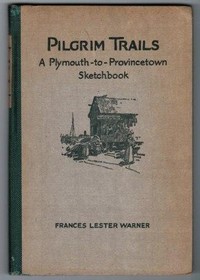
Pilgrim Trails: A Plymouth-to-Provincetown Sketchbook — A Reader’s Guide
(0 User reviews)
226
Project Gutenberg
2011
Not confirmed
Massachusetts -- Description and travel
Readers of public-domain and historical texts
Project Gutenberg digital edition
en
Edition facts
Words
14,845
Reading time
65 min
Text sections
2
For Pilgrim Trails: A Plymouth-to-Provincetown Sketchbook — A Reader’s Guide, the stored edition analysis reports 14,845 words, 1 hr 5 min estimated reading time, and 2 detected text sections.
The text analysis averages about 23.4 words per sentence, while the detected sections provide another way to judge how the source is divided.
Project Gutenberg metadata also associates the work with “Massachusetts -- Description and travel,” connecting these edition facts with the source record’s subject description.
Source:
Project Gutenberg record #35136
Frances Lester Warner's 1921 sketchbook follows a party of four—artist, businessman, young woman, and narrator—as they explore Plymouth to Provincetown, blending travelogue with architectural observation and colonial history. The author's conversational voice, precise descriptions of 'nautical' houses, and use of dialogue among companions distinguish this from a standard guidebook.
Editorial Edition Score
4.5/5
★★★★★
★★★★★
Calculated from edition completeness, EPUB availability, text structure and catalogue metadata. Not a user rating.
How this score is calculated
- Description quality20 pts
- Title & short description10 pts
- Source metadata20 pts
- Text length15 pts
- Chapters / structure15 pts
- EPUB file integrity20 pts
Total of 100 points, scaled to a 2.5-5.0 range. Editions with an empty description or a missing EPUB file are not scored.
Edition quality
Read the Text
Alexander was meeting a business appointment, and Barbara and I had come to see Plymouth.
"I'm going in among those places on the other side of Town Brook," said the artist. "The only way to find something good is to go everywhere you're not supposed to."
"But you and Barbara," said Alexander, as he prepared to escort us out to the main street, "might as well go where you're supposed to."
He paused for a moment to let his words sink in.
"The best way," said Alexander, "is to follow your guide-book."
"The best way," said the artist over his shoulder, "is to explore."
Barbara receives advice from her two brothers with the air of a young empress listening to the remarks of two prime ministers, but makes her own decisions. I have acted as her confederate and chaperon on so many occasions that I know enough to be quiet until the prime ministers have gone.
"The best way," said Barbara when this had happened, "is to ask a little boy."
Doubtless any real expedition to Plymouth ought to begin with the Rock. We found our way down along the water-front, to the place where the Rock used to be, but it was nowhere in sight.
"When I was here before," said I, "the Rock was exactly here, under its canopy at the foot of Cole's Hill. You couldn't miss it."
Barbara looked out along the wharves. Some children were playing at the end of one of the piers.
"We'll ask a little boy," said Barbara, leading the way.
"They look like little foreigners," said I. "Do you think they would know?"
For answer, Barbara went out slowly to the edge of the pier, and stood watching the white seagulls flying over the harbor. The boys gave her a glance, made up their minds about her, and went on with their play.
"_Where's_ the Rock?" said Barbara casually, over her shoulder.
"They're moving it," said one.
"It's all broke up," said another.
"Want us to show it to you?" said a third.
"Yes," said Barbara. "Where are they moving it to?"
"Down to the edge. When they get it there, we can swim right up to it," said our guide with unction. "But now it's all broke up."
He was leading us rapidly back to Water Street, to a great pile of masonry by the roadside. "That's the rock," said he. "Here's some, and here's some, and here's some more. All broke up."
The boys were scrambling over the arches and hopping about among the blocks of granite.
"Oh, yes," said Barbara tactfully, "this is the old canopy that used to be over the Rock, isn't it? And where's the real Rock?"
Our guide looked puzzled. Then light dawned. "The little one with 1620 on it? Down on the other side of the road." He waved a brown fist. "See?"
And there it was, the famous boulder, waiting to be taken to its new position at the water's edge. Plymouth Rock is a very satisfactory relic; just the shape of a Rock. Its prehistoric excursions with the glacier and its historic pilgrimages since 1620 have combined to lead it a roving life. In Revolutionary days it was on Town Square, with the Liberty Pole; then it migrated to the lawn in front of Pilgrim Hall; then it rested under its canopy at the foot of Cole's Hill--and in all these positions it inspired tourists to remarks about the agility of the Fathers in using it as a stepping-stone from the harbor to dry land. And now, in 1921, it goes back to the original landing-place, where the high tides will reach it again.
Barbara and I congratulated ourselves on our luck in arriving at the right time to catch it on the move. Probably its fourth century of fame will bring it more visitors than ever before, including our friends, the little delegates from Portugal and Italy, who hope to swim near by.
"Now," said Barbara, "let's go up to Leyden Street and see if we can imagine that it's First Street, with the first houses and all."
Frances Lester Warner opens Pilgrim Trails not with a historical preamble but with a dispute over how to see Plymouth. The artist declares a house 'nautical,' and the narrator elaborates: a nautical house is built by generations of skippers, added onto haphazardly, with roofs shaped 'something like the roof of a barge.' This attention to architectural detail—the weathered blue paint, the gable-and-lean-to jumble—sets the book's method. Warner's party of four (the artist, his brother Alexander, Barbara, and the narrator) immediately splits over method: Alexander advises following a guide-book; the artist insists on exploring 'everywhere you're not supposed to.' The narrator aligns with Barbara, who receives her brothers' advice 'with the air of a young empress listening to the remarks of two prime ministers.'
Conversational Framing and Character Dynamics
The book's structure is built around the interplay of four characters whose opinions shape the narrative. The artist is the aesthetic eye, Alexander the pragmatic voice, Barbara the silent decision-maker, and the narrator the confederate. Their dialogue—often humorous, as when Alexander pauses to let his words 'sink in'—gives the travelogue a novelistic texture. Warner uses these exchanges to dramatize different ways of seeing: the artist's search for the unscripted versus Alexander's faith in the guide-book. This tension recurs, as when the narrator notes that Barbara 'makes her own decisions,' suggesting a quiet autonomy. The character dynamics prevent the book from becoming a mere itinerary; instead, it reads like a recorded conversation among friends, with the landscape as a shared topic.
Architectural Observation as Historical Clue
Warner's descriptions of buildings are precise and evocative. She notes that a nautical house must be built 'more than a hundred years ago' and added onto over time, with 'a different kind for every addition.' This method of reading architecture—treating a house's additions as a timeline—extends to her treatment of historic homes. Of the Winslow house, she records that 'thirty-four coats of paint had to be removed from the woodwork of the entrance hallway' and that four fireplaces were hidden inside one. Such details ground the history in material evidence. She also observes that 'old houses make friends easily,' likening them to people who 'have known our grandfathers.' The buildings are not static monuments but living structures that invite connection.
The Pilgrims' Practicality Over Heroics
Warner resists romanticizing the Pilgrims. She notes that their chronicler says simply, 'now they must of necessitie goe to their great lots; they could not other wise keep their katle.' The settlers, she argues, did not come 'out of restlessness, or for adventure, or primarily for exploring the new continent.' Instead, they came 'to settle it—to open it up.' This pragmatic framing extends to her portrait of Edward Winslow, whom she calls 'Plymouth's favorite representative in foreign affairs.' She highlights his varied duties—from convoying beaver pelts to defending judicial policy—and includes Oliver Cromwell's method for forcing agreement: commissioners were to be 'shut up in a chamber, without fire, candles, meat, or drink' until they agreed. The tone is wry, not reverent.
Voice and Diction: Colloquial Precision
Warner's prose is conversational but exact. She uses phrases like 'tucking in a shipshape companionway' and 'run out as long as you please, shaped on top something like the roof of a barge.' The diction is nautical and domestic, fitting the subject. She also employs understated humor: Alexander's advice to 'go where you're supposed to' is undercut by the artist's retort. The narrator's own voice is observant but self-effacing, often deferring to the artist's eye or Barbara's judgment. This colloquial precision extends to historical asides: Winslow's tracts are called 'sprightly,' and Cromwell's methods are described without editorializing. The effect is a travelogue that feels intimate, as if the reader is walking alongside the party, hearing their remarks.
Warner's sketchbook rewards readers who enjoy watching a place through the eyes of a curious party rather than a solitary guide. The dialogue among the four companions—each with a distinct approach to travel—offers a subtle commentary on how we choose to see history. Pay attention to the buildings: Warner treats them as documents, their additions and paint layers telling stories the written record may omit. The book is best read not as a comprehensive history but as a series of impressions, where the author's voice and the artist's sketches (though absent from this text) together create a portrait of a region still shaped by its Pilgrim foundations.
Sometimes, reading Warner’s sketches of Cape Cod’s crooked doorways and salt-scoured shingles, I felt the same unhurried companionship with place—not travel, but an earned intimacy. Her casual dialogue among friends lingered in me, much like the quiet, layered conversation I found within Denmark — Context and Discussion. Both felt less like guides, more like old letters from a patient traveler.
There are no reviews for this eBook.
There are no comments for this eBook.
Reader reflection
Your personal reading reflection
Build a private reading journal entry for this title.
Your progress
0
/
10
2
Did this book hold your interest?
3
How likely are you to recommend this book?
4
How demanding did the text feel?
5
Did you gain anything practical from the text?
6
How understandable was the text?
7
How closely did the book connect with your experience?
8
What was its emotional impact?
9
In one sentence, what did you learn?
10