1


Notes in North Africa Being a Guide to the Sportsman and Tourist in Algeria and Tunisia — Text and Context
(0 User reviews)
24
Project Gutenberg
2009
Not confirmed
Tunisia -- Description and travel; Algeria -- Description and travel
Readers of public-domain and historical texts
Project Gutenberg digital edition
en
Edition facts
Words
26,969
Reading time
118 min
Text sections
4
The source record for Notes in North Africa Being a Guide to the Sportsman and Tourist in Algeria and Tunisia — Text and Context measures this digital text at 26,969 words, 1 hr 58 min estimated reading time, and 4 detected text sections.
The text analysis averages about 23.4 words per sentence, while the detected sections provide another way to judge how the source is divided.
Project Gutenberg metadata also associates the work with “Tunisia -- Description and travel,” connecting these edition facts with the source record’s subject description.
Source:
Project Gutenberg record #30581
A second-edition sporting guide to Algeria and Tunisia, blending travelogue with hunting anecdotes. The author candidly admits the region disappointed his sporting expectations, yet the book offers detailed observations of local customs, landscapes, and the challenges of travel in the 1860s.
Editorial Edition Score
4.6/5
★★★★★
★★★★★
Calculated from edition completeness, EPUB availability, text structure and catalogue metadata. Not a user rating.
How this score is calculated
- Description quality20 pts
- Title & short description10 pts
- Source metadata20 pts
- Text length15 pts
- Chapters / structure15 pts
- EPUB file integrity20 pts
Total of 100 points, scaled to a 2.5-5.0 range. Editions with an empty description or a missing EPUB file are not scored.
Edition quality
Read the Text
THE VOYAGE OUT:--Paris in 1860--Notre Dame--Our Hotel--Nero and the Groom--The Steamer for Algeria--Gallic Peculiarities--Life on Board 7
DESCRIPTION OF ALGIERS:--Arrival in Algeria--Murray's Guide-books, and their Amenities--Disembarkation in the Port of Algiers--Our Fellow-travellers--Algiers and its Inhabitants--The Dey's Palace--Cause of the French Invasion 13
LIFE IN ALGIERS:--Algerian Society--A Soiree at General Martinprez's--The Sirocco--My Maltese Companion--The Theatre--General Youssouf and his Career 19
"UP THE COUNTRY:"--Departure from Algiers--Blidah--The Zouave Officers and their Companions--Government Establishment of Horses--Joseph, the Horse-dealer--To Arbah--The Caravanserai--Journey towards Oued-el-Massin 25
FURTHER EXPERIENCES:--Abd-el-Kader (but not the Emir)--Difficult Road--Perils of the Way--Prospect of Sport--The First Boar--The Chasseurs d'Afrique--Mine Hostess of the "Scorpion"--Teniet 30
FURTHER PROGRESS--RELIGIOUS CEREMONIES:--Cold Weather--Milianah--Vezoul--The Aubergiste--El Afroun--The Rhamazan--Dancing Dervishes 36
BONA AND ITS VICINITY:--Passage to Bona--State of Affairs on Board--Bona--The Lake Metitza--Ain Mokra--Wild Duck Shooting on the Lake 41
ON TO TUNIS:--Algeria in General--The Arabs and their Conquerors--Antagonism between the Two Races--Social Condition of the Arabs--The _Oasis_ Steamer--Arrival at Tunis 46
MARSA:--Angelo's Horsemanship--The Bey's Palace at Marsa--The Arabs and their Love of Tobacco--The Friendly Moor at Camatte 52
ABOUT BOAR SHOOTING:--Sleeman--the Oued el Ahwena--Its Scenery, and its Dangers--Beauty of the Landscape on its Banks 55
SPORTING EXPERIENCES:--El Greesh--Shooting Hyenas--An Expedition with the Arabs--The Caid and his Family--Another Wild Boar 59
TUNIS AND ITS GOVERNMENT:--Picturesque Situation of Tunis--The Horse Market--Effects of Race--The Bazaars--Mohamed Medea--The Bardo--The Bey of Tunis--His Mode of administering Justice--Prince Puckler Muskau's Account of his Interview 62
THE RUINS OF CARTHAGE:--Reflections on Ancient Carthage--Hannibal and his Career--An Arab Domicile--Picturesque Appearance of the Ruins 69
THE RUINS AGAIN:--Great Extent of the Ancient City Marsa, on the Sea-shore--Carthaginian Catacombs near Camatte--Quail Shooting--Trait of Honesty in the Arabs--The Arab Character--Anecdotes concerning them 76
HOME:--My Fellow-passenger, the Sportsman--Passage from Tunis to Malta in a Sailing Vessel--Disagreeables of the Passage--Home Overland--Conclusion 83
NOTES FOR THE SPORTSMAN OR TOURIST IN NORTH AFRICA 88
NOTES IN NORTH AFRICA.
Paris in 1860.--Notre Dame.--Our Hotel.--Nero and the Groom.--The Steamer for Algeria.--Gallic Peculiarities.--Life on Board.
_In medias res._ I will not stop to describe my journey to Paris, _via_ Folkestone, nor to chronicle the glasses of pale ale--valedictory libations to _perfide_ Albion, quaffed at the Pavilion--nor to portray the sea-sickness of "mossoo," nor the withering indignation of the British female when her wardrobe was searched. Briefly, kind reader, be pleased to understand that we arrived in safety--guns, rifles, "and all"--at the Hotel du Louvre, in Paris, at about eleven o'clock on a certain day in February, 1860.
The next day was Sunday, and I went to hear vespers at Notre Dame. How I love the old gothic cathedrals, that seem to remove one at once from this work-day world--the fanes wherein the very air seems redolent of devotion, and peopled with phantoms of the past! 'Spite of all disparagement, there is something grand and solemn about them. After service, I ascended one of the towers to the gallery immortalised by Victor Hugo's wonderful romance. The day was declining, and sunset had already commenced. The galleries were crowded with students and respectable operatives and _bourgeois_, with their wives and children. Every face was bathed in the purple light of the departing sun, and many eyes lifted up in silent meditation.
I was aroused from the reverie into which the contemplation of this glorious sight had thrown me, by hearing a female voice exclaim, "How beautiful is Nature--how magnificent!" I turned, and saw two ladies, evidently mother and daughter, of sufficiently pleasing appearance. It was from the elder that the exclamation had come, which brought me back from my dream to this nether world. Conquering the shyness which appears to be the Englishman's birthright, I made some remark on the beauties of sunset. Like the earth, we revolved round the sun; but, unlike that planet, we quickly diverged into other orbits. I dimly remember that we talked of Angola cats, Dresden china, Turkish chibouques, maccaroni, and Lord Byron, with whose poems this lady seemed sufficiently familiar. I improved the occasion, as the right thing to do, when talking with ladies about Byron, to find fault with his impiety, his blasphemous scepticism, his cutting sarcasm, and the unhappy frivolity which defaces the works of the man, who, with all his faults, was undoubtedly the greatest poet the nineteenth century has yet produced.
W. G. Windham’s Notes in North Africa opens with a preface that frankly addresses criticisms of the first edition: personal allusions and a lack of sporting content. The author concedes that “the man who seeks sport alone and solely” should not go to Algeria, as he himself was “most decidedly” disappointed. This honesty sets the tone for a work that is as much a travel diary as a guide, blending practical advice with personal anecdotes.
The catalog subjects—Tunisia and Algeria—are accurate, but the excerpts reveal a narrower focus: the author’s own experiences, often mediated by local intermediaries like his servants Angelo and Nero, and his interactions with Arab tribes. The book’s subtitle promises guidance for “the Sportsman and Tourist,” yet the text frequently dwells on the difficulties of finding game, the unreliability of local transport, and the author’s own physical ailments.
Sporting Disappointments and Honest Admissions
Windham’s preface is unusually candid for a guidebook. He acknowledges that the first edition was criticized for lacking sport, and while he added material, he still warns readers not to expect abundant hunting. This tension between the book’s title and its content is a recurring theme. In the excerpts, the author describes shooting a hyena near El Greesh, but the episode is framed by frustration: the local tribe’s noise, a sprained ankle, and a lion or panther that frightened the horses. The hunt yields only “small game” after hours of effort. Similarly, a boar hunt on the Oued el Ahwenah involves standing “up to my knees in the river” for an hour, a broken horse, and Arabs deserting due to Ramadan. These accounts suggest that sport in North Africa required patience and adaptability, not guaranteed success.
Encounters with Local Populations
Windham’s interactions with Arab and Berber communities form a significant part of the narrative. At El Greesh, the entire tribe gathers to examine him, his arms, and his gestures, treating him “as if I was an event.” The author’s discomfort is palpable: he finds the natives’ joy at his return “to my chagrin” and retreats to his tent. Later, a Caid’s son is described as “a very fine, handsome lad,” and Windham promises to send a present from Tunis. These moments reveal a colonial traveler’s perspective—curious but often uneasy, relying on backsheesh and dumbshow conversation. The book’s catalog subjects do not capture this social dimension, which is central to the excerpts.
The Role of Servants and Companions
Windham’s servants, Angelo and Nero, are featured in the frontispiece and throughout the text. They assist in carrying game, managing horses, and navigating local customs. When Arabs desert during Ramadan, Angelo and a companion manage to carry a boar “between them.” The author also mentions a Maltese companion and an Italian hunter, highlighting the reliance on European or local intermediaries. These figures are not mere background; they are essential to the author’s mobility and success. The catalog subjects omit this human infrastructure, yet it is a key element of the travel experience Windham describes.
Readers should approach Notes in North Africa not as a comprehensive guide but as a personal record of one sportsman’s journey. The book’s value lies in its unvarnished details—the broken horses, the noisy tribes, the solitary hyena shot at dusk. Windham’s willingness to admit disappointment makes the work more trustworthy than many contemporary guides. For those interested in mid-19th-century travel in the Maghreb, this edition offers a vivid, if limited, window into the challenges and curiosities of the region.
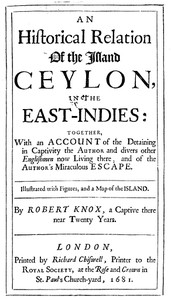
Reading how the author’s hunting hopes faded into patient observation of the land reminded me of a quiet afternoon in my grandfather’s study, turning pages about places I’d never see. That same slow surrender to place—captivity becoming closeness—lives in An Historical Relation of the Island Ceylon in the East Indies Together with an Account of the Detaining in Captivity the Author and Divers other Englishmen Now — Background and Themes, where another traveler’s disappointment softened into wonder.
There are no reviews for this eBook.
There are no comments for this eBook.
Reader reflection
What did you think of this book?
Answer a few questions and save a private reflection on this device.
Your progress
0
/
10
2
Was reading this book enjoyable?
3
How likely are you to recommend this book?
4
What was the reading difficulty like?
5
Would you start a conversation about this book?
6
Did anything about the book feel genuinely new?
7
How much did the book move you?
8
Which part made the strongest impression?
9
Which lesson or insight stayed with you?
10