
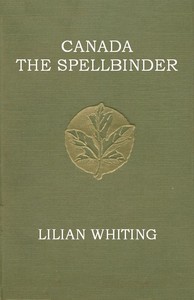
Canada, the Spellbinder by Lilian Whiting
I first picked up Canada, the Spellbinder on a rainy afternoon, expecting a dusty travel guide from 1914. Boy, was I wrong. Lilian Whiting doesn’t just list facts; she makes you feel the spray of the Saguenay River and hear the switchbacks of the Canadian Rockies. This book was my ticket to a Canada that doesn’t exist anymore—and honestly, neither do I.
The Story
Whiting sets off on a grand train adventure from Montreal to Vancouver, but this isn’t your typical tourist’s photo album. Along the way, she stops in every major city and tons of tiny towns to interview anyone who will talk to her—judges, explorers, hotel managers, folks from Indigenous communities, writers, and nuns running schools on the frontier. She wants to understand one thing: what holds such a enormous, diverse, often cold country together? Canada in the 1910s was building railways and schools while dealing with deep disagreements on language and rights, especially between French and English speakers. Whiting pokes holes and gives credit wherever it’s due, from the Château Frontenac to a birch-bark canoe.
Why You Should Read It
I’m not a historian, so I loved how this book felt like having coffee with a super smart, slightly dramatic friend who’s obsessed with an underdog nation. The human stories hit hardest—like a nurse telling her own gripping escape from a forest fire, or the haunting quiet of seeing massive cemeteries sorted by ships carrying steerage passengers in crowded, smelling lower decks full of big dreams and diseases. Whiting doesn’t sugarcoat early Canadian poverty or cultural clashes. But she also writes with such longing and awe that you can’t help but fall a lot morally in-love with snowy frontier towns. I realized my country (and yes, I’m not Canadian!) has a rich, gritty history actually tied to its geography—not just political ideals. That was honestly an epiphany at my old café table.
Final Verdict
This book is not for people who need loud car chases or villains. Who needs that when Whiting brings actual strong-minded great aunts arguing in a Winnipeg parlor over representation of Western Canada? Perfect for anyone who daydreams about old trains, talking to elders, or witnessing real slices of a place becoming a multi-hued family—before the world wars, before highways erased gravel roads, families uprooted and camped there. GIVE IT A HOUR on vacation weekend. You won’t forget you’re reading, but in the best way. Honest and unapologetically gee-knows—go adopt Laura Ingalls Wilder fell into Charles Dickens’ lap by Mist River. Stop resisting it; it’s magic.
This title is part of the public domain archive. Knowledge should be free and accessible.


Kimberly Martinez
9 months agoIt took me a while to process the complex ideas here, but the footnotes provide extra depth for those who want to dig deeper. I am looking forward to the author's next publication.